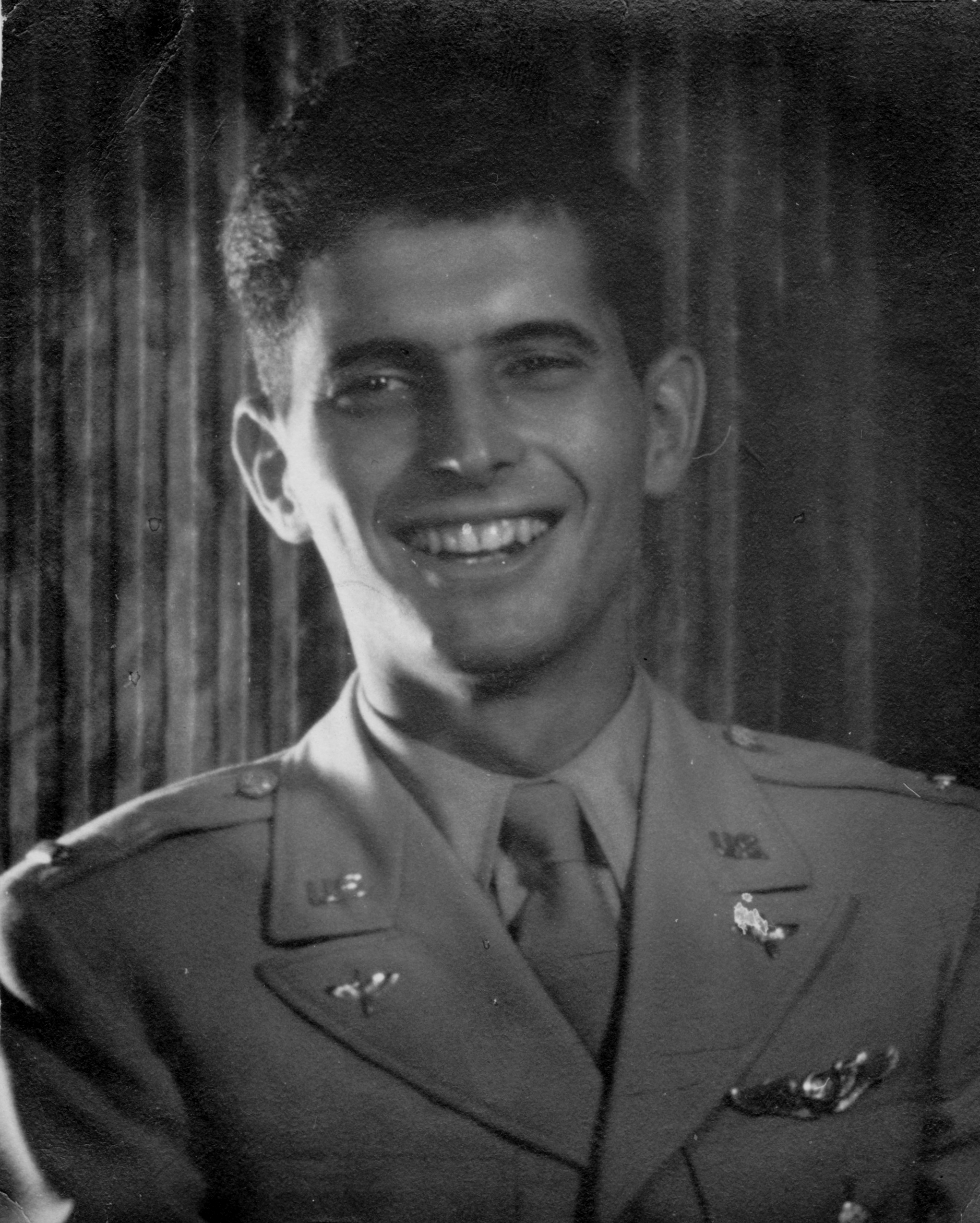
2nd Lt. Edward Field. Photograph - Edward Field, courtesy of www.384thbombgroup.com
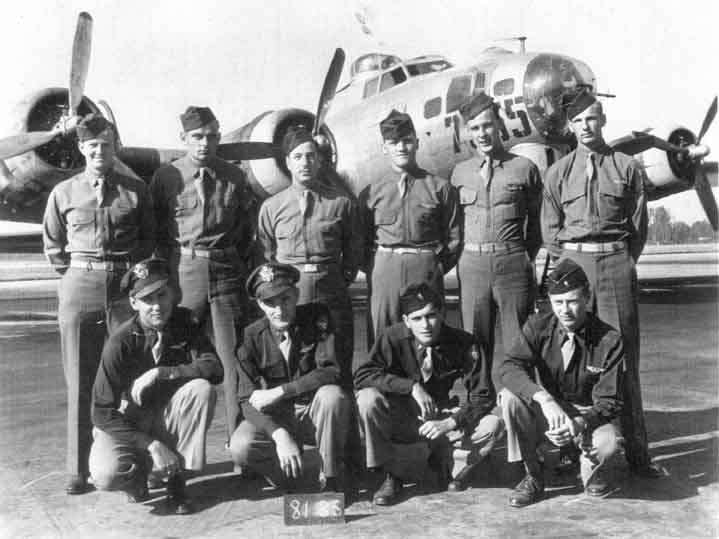
Photo of the Robert Long crew taken in October 1944, at Army Air Field, Alexandria, Louisiana. Edward is front row, 3rd from left. Photo Edward Field, courtesy www.384thbombgroup.com
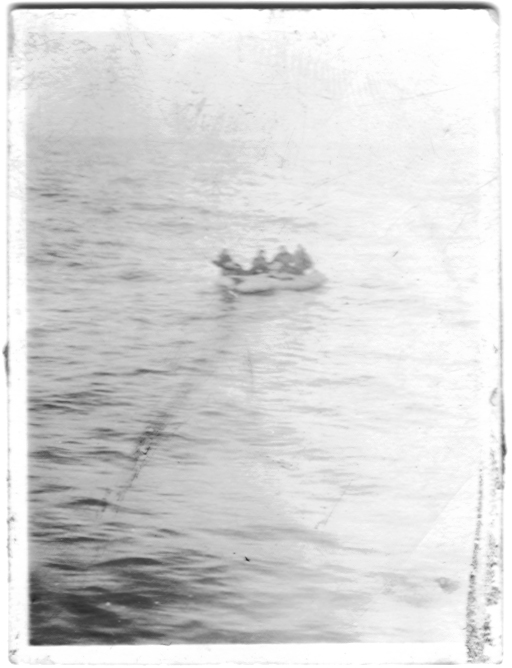
2nd Lt Edward Field adrift in a lift raft following the ditching on 3rd February 1945. Photo Edward Field, courtesy of www.384thbombgroup.com
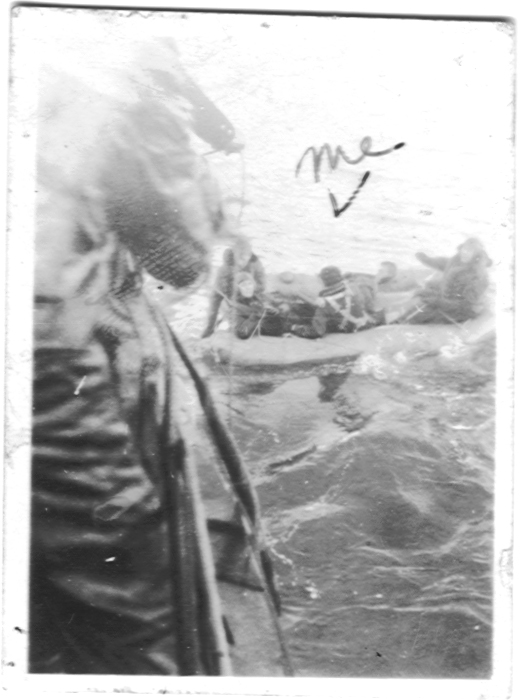
2nd Lt Edward Field adrift in a lift raft following the ditching on 3rd February 1945. Photo Edward Field, courtesy of www.384thbombgroup.com
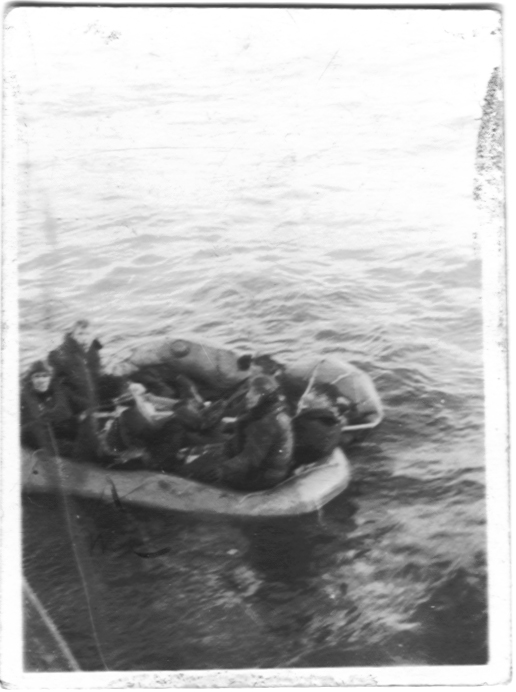
2nd Lt Edward Field adrift in a lift raft following the ditching on 3rd February 1945. Photo Edward Field, courtesy of www.384thbombgroup.com
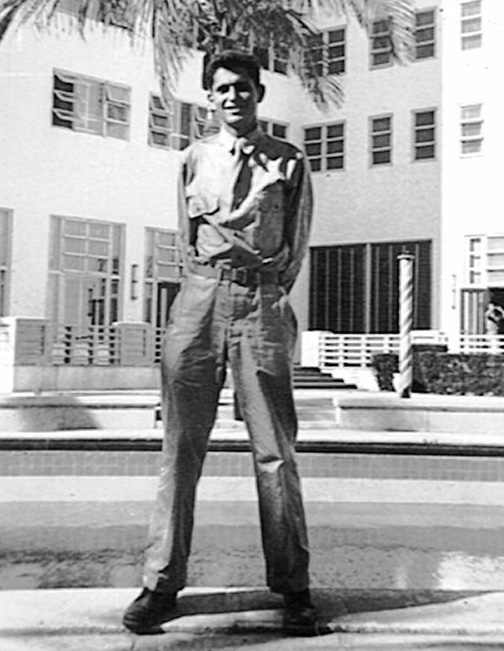
Photograph of Edward Field whilst at basic training. Photo Edward Field, courtesy of www.384thbombgroup.com
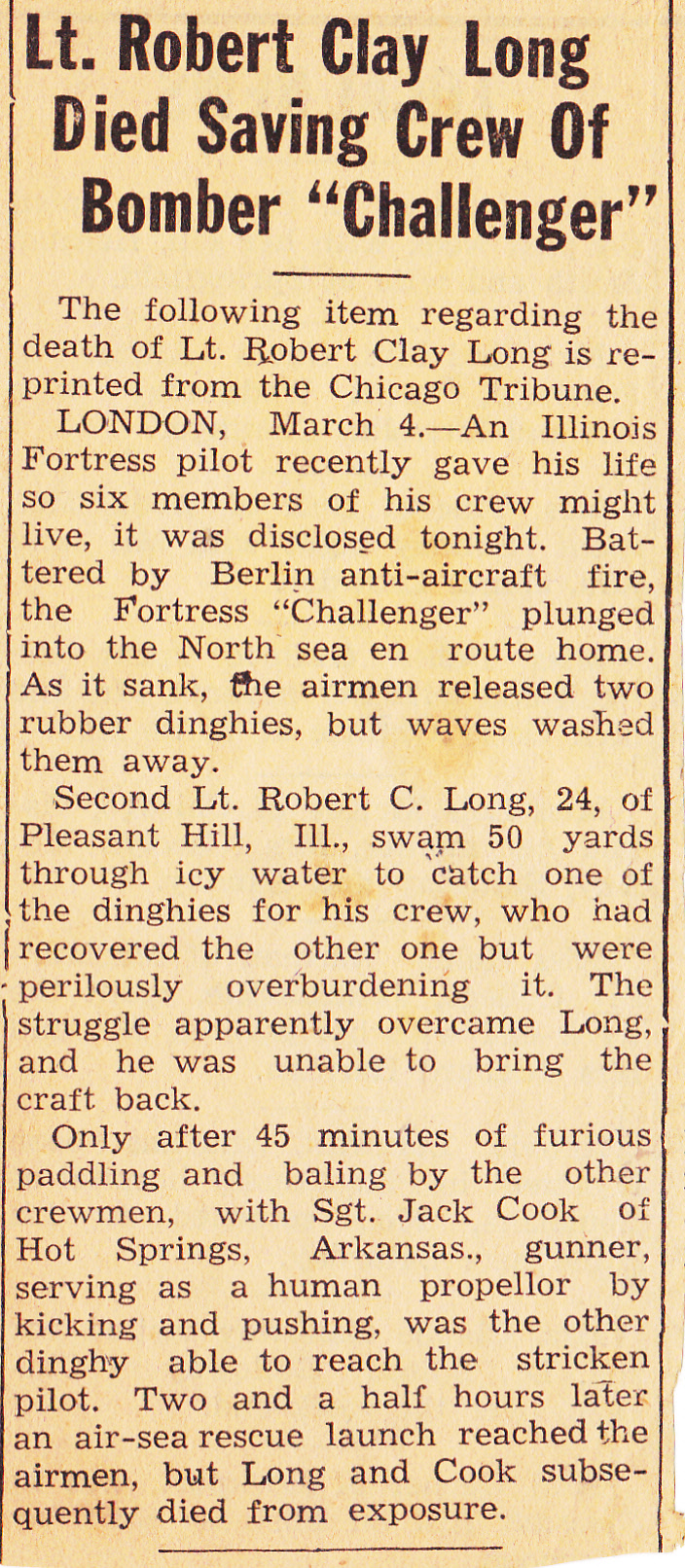
A Calhoun County Illinois newspaper article on the ditching of "The Challenger", 3rd February 1945. Image John Selle, courtesy of www.384thbombgroup.com
Congressional Record, 21st March 2018, by Congressman Bruce Westerman in honouring the sacrifice of Jack Coleman Cook. Edward felt that Cook had sacrificed his life so he could live. Image courtesy of www.384thbombgroup.com
A letter from Arkansas Governor Asa Hutchinsom, 12th March 2018, honouring the sacrifice made by Jack Coleman Cook during the ditching on 3rd February 1945. Image courtesy of www.384thbombgroup.com
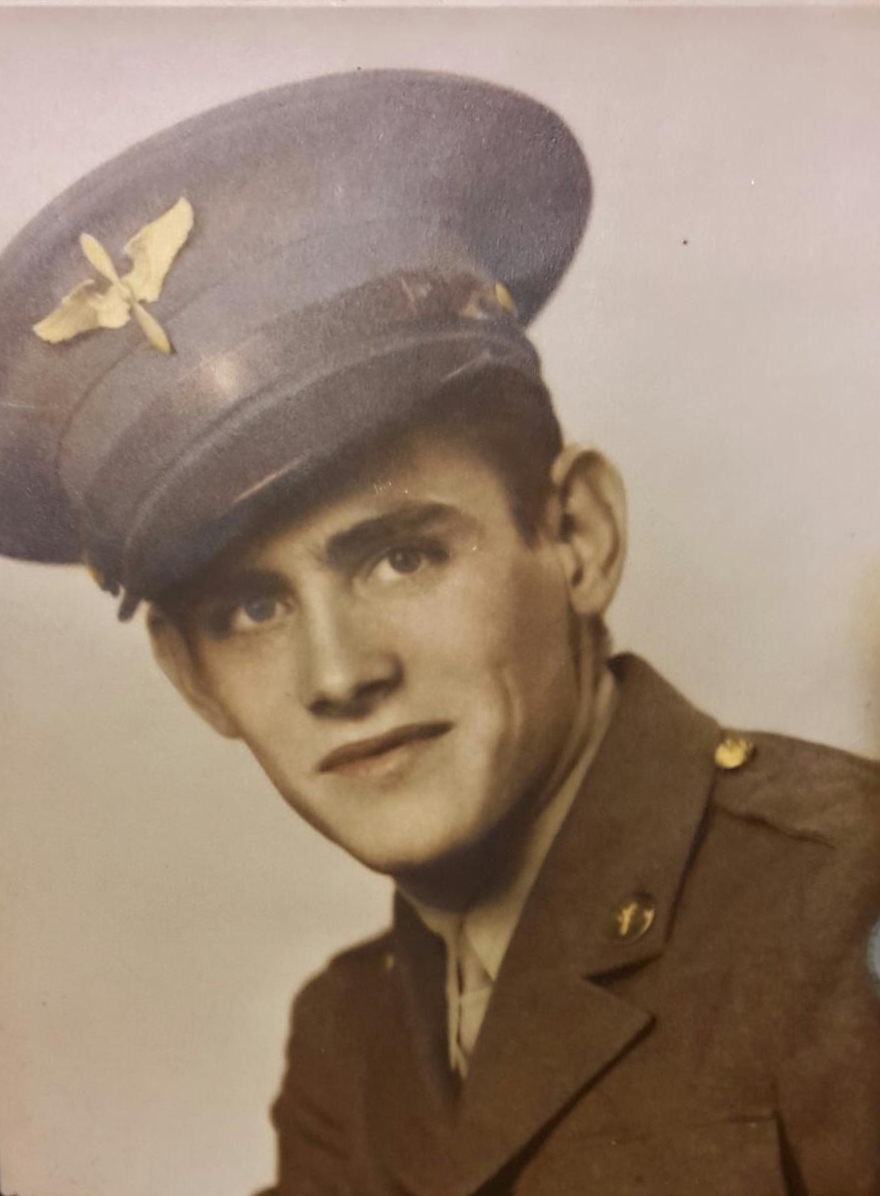
Jack Coleman Cook, KIA 3rd February 1945. He died from exposure after ditching in the sea on 3rd February 1945, sacrificing his place in the escape raft for Edward Field. Photo Delia Cook McBride, courtesy of www.384thbombgroup.com
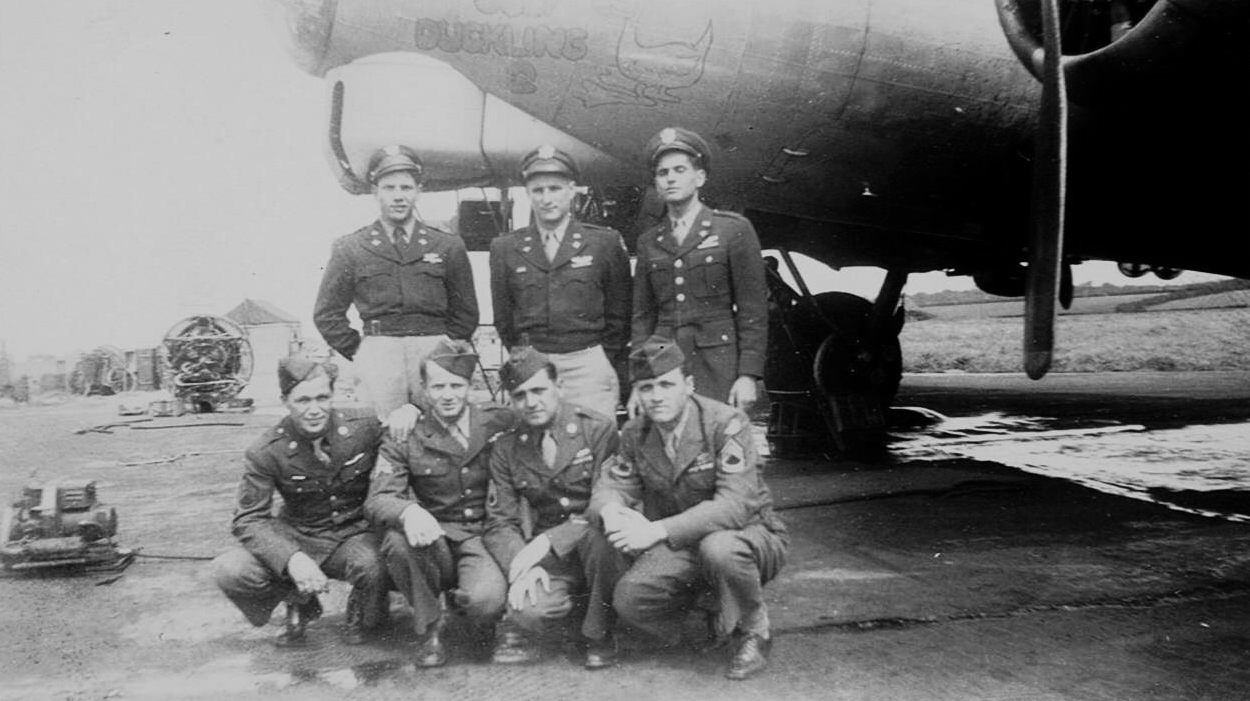
2nd Lt. Edward Field, rear row, far right. Unknown B-17G, the name "Ugly Duckling 2" is not registered. Photo Edward Field, courtesy of www.384thbombgroup.com
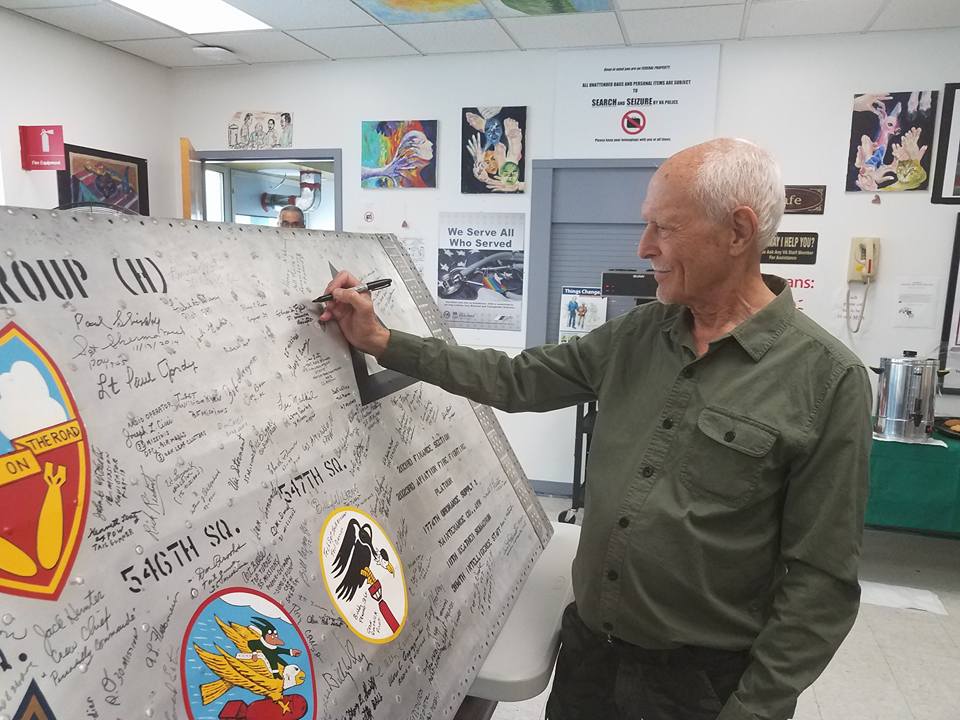
Edward Field signing the commemorative wing panel, 10th July 2017. Photo courtesy of www.384thbombgroup.com
The Story of Edward Field
Last updated: November 11, 2026, 6:25 pm2nd Lt.
Edward Field
Navigator
546th Bomb Squadron
384th Bombardment Group (Heavy)
Serial Nr O-2065887
Missions Credited - 27
Edward was born on 7th June 1924, in Brooklyn, New York. His parents, Louis and Hilda were Jewish immigrants of Eastern European heritage, who had both arrived in America as children. Edward was one of six children, he had two older sisters – Adele and Alice – two younger twin brothers – Richard and Robert, and a younger sister, Barbara. His father was a commercial artist for MGM, whilst his mother was kept busy at home, whilst being a ‘hat model’ at times.
As a child, the family grew up in Starke Place, Lynbrook, Nassau County, Long Island, New York. By Edward’s own words, as a Jewish family life was difficult in this neighbourhood. His father had been forced to change their surname to ‘Field’ from Fieldinski to be able to obtain work with MGM, to hide his Jewish heritage. On enrolling at a new school, Edward speaks of being singled out by a teacher for being a Jew. He also states that as the oldest boy in the family, he held a certain responsibility to the family in terms helping look after his siblings and the family home. Overall, childhood held many challenges for Edward.
After leaving college, Edward attempted to get employment within the advertising industry, with little success. In November 1942, he enlisted, by his own choice being assigned to the Air Corps. Following a test at San Antonio he was assigned to be trained in the role of Navigator – his aptitude for math made him a suitable candidate at a time when Navigators were also in short supply.
After commissioning as a 2nd Lt., he spent some time at Baton Rouge before moving to Lincoln, Nebraska for aircrew training.
It was around this time that Edward discovered poetry, which would come to have a huge influence on his future life. At the start of a 3-day train journey across states, an American Red Cross lady handed him a ‘Care’ package containing a toothbrush, chocolate bar and a paperback book, an Anthology of Poetry, which he was to read for the next three days. By the end of the three days, Edward was determined to become a poet after the wars’ end.
On the 9th January 1945, the crew of pilot 2nd Lt. Robert Clay, including 2nd Lt. Edward Field, were assigned to the 546th Bomb Squadron of the 384th Bombardment Group (Heavy) at RAF Grafton Underwood, in England. On 29th January 1945 the full crew flew their first mission together, to the railroad marshalling yards at Siegen, Germany.
Five days later, on 3rd February 1945, the crew flew their third mission, this time to the Tempelhof railroad marshalling yards in Berlin, Germany. Their aircraft for this day was B-17G #42-102501 The Challenger, this was to be its 100th combat mission with the 384th.
Shortly before bombs away, the aircraft was struck by flak, causing serious damage. Engines #3 and #4 were hit, with a loss of oil pressure forcing #3 engine to be feathered. They were able to keep #4 running, despite damage. The right wing had also suffered damage, the left Tokyo tank had been hit and lost its fuel contents, and the plexiglass nose had been shattered. Fortunately, no crew members had been injured. Despite the damage, the aircraft was able to stay with the formation and dropped their bomb load. However, on leaving the target area, The Challenger was unable to keep up with the main body of the formation and slowly fell behind.
The decision was made to try and return to England. As airspeed dropped, the aircraft began to lose altitude and had dropped to 17,000 feet as it crossed the French coast. It was targeted again by flak at this point; however, this was inaccurate and added no further damage. As altitude loss began to increase, everything that could be jettisoned from the aircraft to lighten the load was dropped. At 5,000 feet and with no coastline in sight, it was clear the aircraft was going to have to ditch, and preparations began amongst the crew. They had at this point been joined by a further B-17, which was assumed to be reporting the predicament and position by radio for rescue services. At 13.15, with all crew other than the pilot and co-pilot in the Radio Operators compartment, the aircraft hit the sea.
The crew gathered in the Radio Operators compartment scrambled to exit via the hatch in the top of the fuselage. The two life rafts had been released from the fuselage; however, damage to one of them prevented it being fully inflated. Some crew also had difficulty fully inflating their Mae West lifejackets. The heavy sea swell had carried the rafts away from the aircraft, forcing the crew to enter the sea and start to swim towards them. The pilot, Robert Clay Long, and Co-Pilot Ralph John Vrana, who had exited the aircraft via the cockpit windows, had by this time joined the other crew members, with Robert Long swimming to the furthest raft to secure it. Fred Maki was last seen trying to swim to the rafts; however, he disappeared from view, last being seen drifting back towards the aircraft. He was not seen again.
Pilot Robert Long had now reached the semi-inflated raft. Sgt. Cook entered the water from the other raft and for the next 45 minutes remained in the water, kicking to push the raft towards the one containing the pilot. On reaching the raft, Sgt. Cook and Sgt. Duncan got in with the pilot. By this point it was clear that Robert Long had become seriously unwell, and he was to die in the raft.
At around 17.15, four hours after ditching, two P-47's overflew the crew - they dropped flares and flew east to pick up an Air-Sea rescue vessel. One of the P-47's was flown by Lt. Painter, flying out of Saffron Walden, Essex.
Shortly afterwards, vessel RML 523, an Air Sea rescue boat, arrived on the scene and helped the crew members onboard. Unfortunately, it was too late for Sgt. Cook who was to die of exposure on the vessel, whilst on its way back to Milton Lodge, England. Four hours later the survivors were able to set foot back on land.
On return to Grafton Underwood, 2nd Lt. Field was sent for seven days to the Flak Home at Southport.
2nd. Lt. Field’s final mission of the war, his 27th, was also the final mission of the war for the 384th Bombardment Group, and indeed the 8th Air Force as a whole. On the 25th April 1945, the Skoda Armament Works at Pilsen, Czechoslovakia was the target. One element of the 384th Bomb Group had to re-circle the target to drop their bomb load, and were thus the last aircraft over the target. To this end, the 384th Bomb Group could lay the claim of being the Group that dropped the final bombs of the 8th Air Force’s campaign in World War 2.
The aircraft for this mission was B-17G #423-39197 Baby Judy / School Marm – battle damage occurred to one of the engines, forcing the crew to land at Laon / Couvron in France on the return leg.
In interviews conducted later in life, Edward is open that he was gay and had relationships whilst in service, something the majority of his crew were unaware of. This, and the fact that he enjoyed the sense of shared belonging & sense of purpose to the unit, made his time with the 384th Bomb Group enjoyable, when compared to his childhood. The fact that he was Jewish meant his dog tags were marked with a ‘J’, a fact not lost on him should he be shot down over occupied Europe – when combined with his sexuality and the fact he was an Officer, he was very aware of the dangers of falling into enemy hands. However, he also talks of the fact that he justified the missions he flew as a means to dispel Nazi rule across Europe. He enjoyed the excitement that the missions brought, and later mused that this ‘ruined’ civilian life as nothing could match the heady emotions of the missions he flew.
Following the end of the war, Edward was to make good on his promise to himself to become a poet. During his service, Edward had been able to meet up with Coman Leavenworth of the 491st Bomb Group that flew out of RAF Metfield in Suffolk – he was a published poet before his time with the 8th Air Force. Edward’s first poem was published in 1949, with his first collection of work being published in 1963 – “Stand Up, Friend, With Me” - this was to win the Lamont Poetry Prize and was published as a book. He wrote and published a further seven collections of his poetry work, and also two non-fiction books. His works won several literary prizes.
In 1966, he also wrote the narration to the film “To Be Alive!”, a film that was to win an Academy Award in its category.
Edward also wrote two books for younger readers, as well as five fiction stories under the pseudonym Bruce Elliot, alongside his partner of 58 years Neil Derrick.
Edward also spent some time as a tutor of poetry, and was a contributor to many publications both as a writer and editor, whilst he was also in demand as a speaker.
One piece of work that Edward wrote that related to his time with the 384th Bomb Group was published in 1967, titled “World War II’. This was a narrative style poem based on the experience of Edward from the ditching on the 3rd February 1945, and shows a deep consideration for the young ball turret gunner, Jack Coleman Cook, who willingly gave his place in one of the life rafts to Edward – as noted, Cook was not to survive the ordeal.
Alongside his niece, Diane Fredel-Weis, Edward made the poem into an award winning, animated short film titled “Minor Accident of War”. This graphically details the harrowing events from the 3rd February, with the narration of his poem provided by Edward himself.
Minor Accident Of War / An animated WW2 story narrated by Edward Field
Neil Derrick, Edward’s long-term partner, passed away in 2018. In his later years illness had meant that Edward devoted much of his time to his care, meaning he had little time to pursue his love of poetry.
In 2025, Edward collaborated again with his niece, Diane and producers Keri Cameron and Aaron Lubarsky and director Hannah Rafkin on a documentary about his remarkable life including his service in WWII. The film, Field Trip, premiered in New York City in October 2026 at the Soho International Film Festival and won Best Documentary Short and the prestigious Audience Award.
Edward passed away on 6th September, 2026 in New York City at the age of 102.
Research courtesy of Keith Andrews on behalf of 384th Bombardment Group Museum.
With kind thanks to the 384th Bomb Group website www.384thbombgroup.com for permission in using material from their records in the making of this story. It holds a wealth of information, documents and photographs of their activities during World War 2. With thanks to Diane Fredel-Weis for further advice and input into this story.
Further information was taken from a variety of sites including:-
Edward Field (poet) - Wikipedia
Also a very insightful interview with Edward:-
Edward Field Veterans History Project
Gallery
2nd Lt. Edward Field. Photograph - Edward Field, courtesy of www.384thbombgroup.com
Photo of the Robert Long crew taken in October 1944, at Army Air Field, Alexandria, Louisiana. Edward is front row, 3rd from left. Photo Edward Field, courtesy www.384thbombgroup.com
2nd Lt Edward Field adrift in a lift raft following the ditching on 3rd February 1945. Photo Edward Field, courtesy of www.384thbombgroup.com
2nd Lt Edward Field adrift in a lift raft following the ditching on 3rd February 1945. Photo Edward Field, courtesy of www.384thbombgroup.com
2nd Lt Edward Field adrift in a lift raft following the ditching on 3rd February 1945. Photo Edward Field, courtesy of www.384thbombgroup.com
Photograph of Edward Field whilst at basic training. Photo Edward Field, courtesy of www.384thbombgroup.com
A Calhoun County Illinois newspaper article on the ditching of "The Challenger", 3rd February 1945. Image John Selle, courtesy of www.384thbombgroup.com
Congressional Record, 21st March 2018, by Congressman Bruce Westerman in honouring the sacrifice of Jack Coleman Cook. Edward felt that Cook had sacrificed his life so he could live. Image courtesy of www.384thbombgroup.com
A letter from Arkansas Governor Asa Hutchinsom, 12th March 2018, honouring the sacrifice made by Jack Coleman Cook during the ditching on 3rd February 1945. Image courtesy of www.384thbombgroup.com
Jack Coleman Cook, KIA 3rd February 1945. He died from exposure after ditching in the sea on 3rd February 1945, sacrificing his place in the escape raft for Edward Field. Photo Delia Cook McBride, courtesy of www.384thbombgroup.com
2nd Lt. Edward Field, rear row, far right. Unknown B-17G, the name "Ugly Duckling 2" is not registered. Photo Edward Field, courtesy of www.384thbombgroup.com
Edward Field signing the commemorative wing panel, 10th July 2017. Photo courtesy of www.384thbombgroup.com